Understanding Tokens & Token Creation: Launchpads, Pricing, and Verification
fomoDecember 25, 2025

While it is tempting to directly jump into the deep end and start buying every trending coin when you just learn about crypto, it's always better to be patient and truly understand what you're putting your money into.
So let's understand exactly what tokens are, how they are created, and what you need to be on the lookout for before purchasing them.
Understanding Tokens
Tokens are digital assets that live on blockchains and are created via smart contracts. The term 'cryptocurrency' can often be misleading, as most people expect tokens to be a form of payment currency, similar to traditional money.
In reality, tokens are just a representation of value on a blockchain and can be used for a wide variety of purposes.
- Utility Tokens - These are tokens that are required for a specific purpose, like payments or fees. Tokens like ETH or SOL are utility tokens as they are required to pay gas fees on the respective blockchains.
- Governance Tokens - A token that grants the holder voting rights over a protocol. For example, if you want to vote on a proposal that will make a change to the Uniswap protocol, you are required to hold UNI tokens.
- Transactional Tokens - These are tokens that are typically used for digital payments, money transfers, and similar types of financial activity. Stablecoins like USDT or USDC are a great example of this.
- Ownership Tokens - Security tokens are tokens that represent the ownership of a certain asset. For example, if the protocol offers tokenized real estate, the people buying that token own an ownership token.
- Memecoins - These tokens are primarily a vehicle for speculation, with their value being driven by the attention/virality of the meme that the token represents.
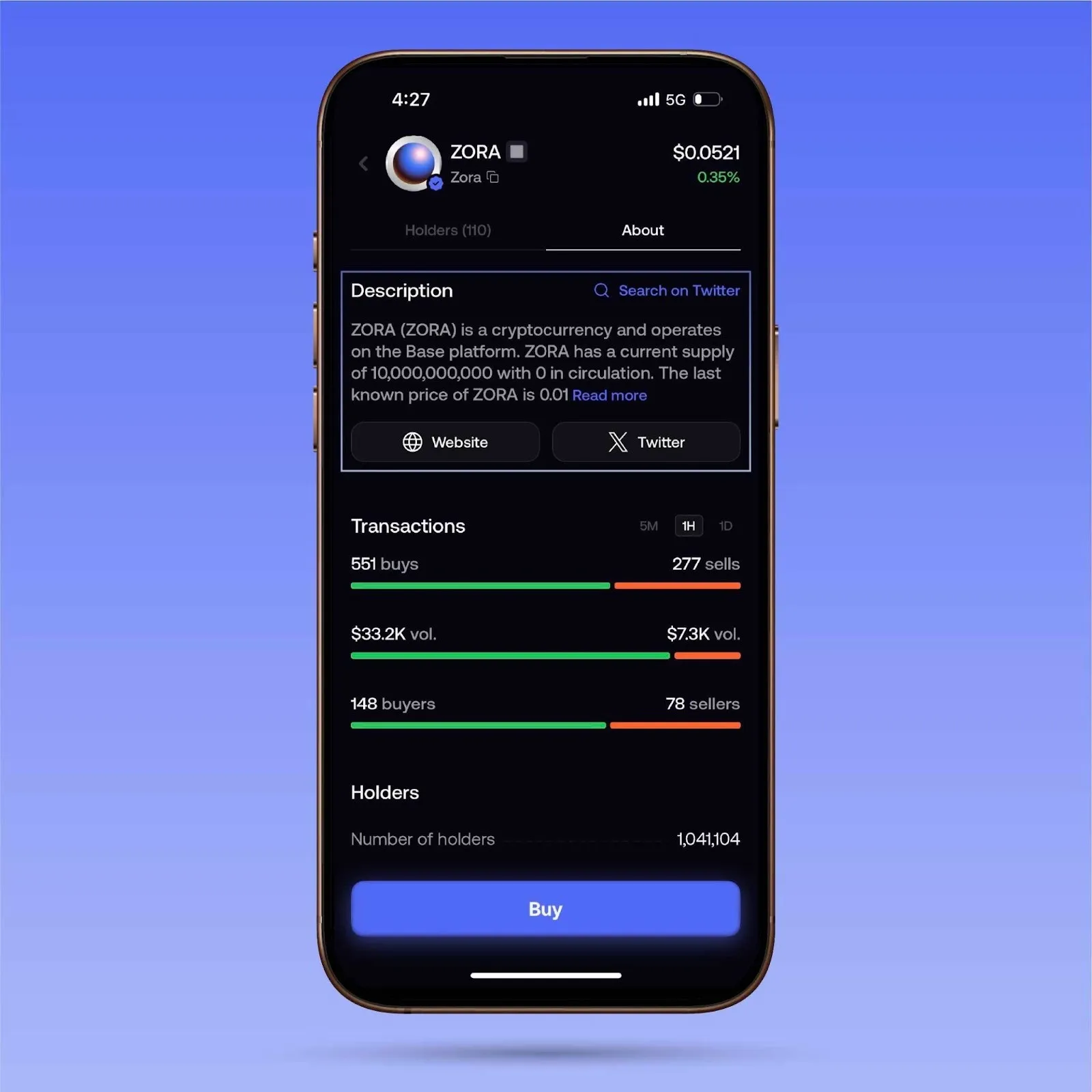
To find out what type of coin you are investing in, you can click on the coin in the fomo app and go to the "About" section. Over there, you should find links to the project's website and social media. Go through it, and you should find information pertaining to what type of coin it is.
This broadly covers all the different types of tokens that you are likely to encounter in the crypto market, but it's only when you look into how exactly these tokens are created that a lot more nuance is involved.
Understanding Token Creation
As stated before, tokens are created through smart contracts. A developer codes all the details of the token, like supply, usage functions, transfer parameters, and so on, into this smart contract, and the smart contract automatically executes this code.
Now, token creation has shifted.
Rather than requiring skilled developers to code the logic of a token into a smart contract, products have been built that simplify the token creation process. These products are called launchpads.
A popular example is Pump.fun.
For the user, all they have to do is enter the basic details, such as the ticker name and logo, and then deposit some money. The platform automatically generates a token for them within seconds.
Naturally, launchpads became very popular. Now, we have over a hundred different launchpad protocols. While they all effectively accomplish the same thing (simplifying token creation), there's significant differentiation in pricing/launch mechanisms.
- Fair launch - With fair launches, everyone has equal access from the start: no presales, no insider allocations, no whitelists, or any similar exclusivity measures. The price starts at $0, and everyone can purchase at the same time with no size limits. The price of the asset is then determined through open market trading.
- Bonding curve - With bonding curves, prices are automated via a mathematical formula until they reach a specific market cap threshold, after which they graduate to an exchange. The price increases as more tokens are bought along a mathematical curve (linear, exponential, etc.) based on the supply minted. Pump.fun utilizes this mechanism, where the price increases along a curve until it reaches a threshold, after which the token is graduated.
- Fixed price auction - All tokens are sold at a predetermined price. Regardless of demand, there are no priority buyers or anything of the sort; everyone gets the same price, and the amount allocated is based purely on the amount invested. Suppose the fixed-price auction is 20% of the token supply sold at $0.001. Everyone can buy any amount at the same price.
- Dutch auction - Dutch auctions start high and incrementally decrease over the auction period, depending on when people buy the asset. For example, if the auction starts at $1, it will incrementally decrease along a curve based on a certain parameter, such as "price will reduce by $0.10 if there are no bids for 10 minutes." This way, the market finds a fair price, and the distribution is fair as it discourages bots and snipers from buying early.
- Tier/time-based pricing - With this mechanism, prices vary based on investment tiers. For example, a token launch may have three rounds. Round one will go to people who were OGs in the Discord and have the tag, round two will be for whitelisted participants, and round three will be for the public. Prices will increase each round.
- Lockdrop - With lockdrops, users are required to lock a specific token for a specified period. Those who lock the token will then receive the new token proportional to the amount they locked. For example, a protocol may require you to lock SOL with them for two months, and then you will get their token dropped when the token is launched.
- Airdrop - Although not technically a launchpad, airdrops are a popular mechanism for token creation. There are specific criteria, such as active community participation, early users of the beta, the amount of volume done on a protocol by a user, and so on. Based on how high a user ranks in the criteria, they receive a proportional airdrop of the token effectively for 'free'.
Why does this matter?
You may have heard the saying "history may not repeat itself, but it often does rhyme." The same applies here.
Tokens that have been launched in a certain way tend to perform in a similar manner in the open market. Of course, there will always be outliers that either outperform or underperform the norm.
Let's break this down.
Airdrops, for example, tend to have a similar start to their price action. The price usually sees a sharp initial drop as people who claim their airdrop rush to sell. After the selling slows down, buyers then step in, and the momentum tends to switch upwards until the market finds a fair price.
After that, it entirely depends on the token's functionality and the protocol. A token like HYPE, which was airdropped, has performed strongly since its airdrop. Conversely, a token like TIA has not had much success.
Lockdrops tend to be similar, as those who locked their tokens faced the opportunity cost of not having access to their assets for a specific period. So they tend to sell pretty early, and then the market eventually finds a fair value for the token.
Then, tokens launched through fair launches or bonding curves tend to be prone to rapid pump-and-dumps.
This is because it's easy for bots to scoop up a good chunk of the supply early on for very cheap. Controlling a significant portion of the supply effectively allows them to influence price movements. After a sharp pump, these bots aggressively dump their tokens, resulting in a sharp price drop.
Then, it depends on the strength of the individual token and how the supply is absorbed for future performance.
Fixed price auctions can be a double-edged sword. This is because there's a risk that the token may be undervalued or overvalued at launch.
If the market deems it to be overvalued, those who buy early may see losses, and if it's considered undervalued, then those who participated in the fixed auction but the protocol would have shortchanged themselves.
It's up to your research to determine whether the token is priced correctly or not.
Even with tier-based auctions, they tend to have a repeated pattern. The system is skewed in favour of insiders who can secure a larger share of the supply at a lower price, effectively allowing them to receive 'free money' by selling their tokens to people in the later rounds.
A good way to go about this, using the fomo app, is to identify all the coins that have been launched through a similar token creation model. Then create a watchlist.
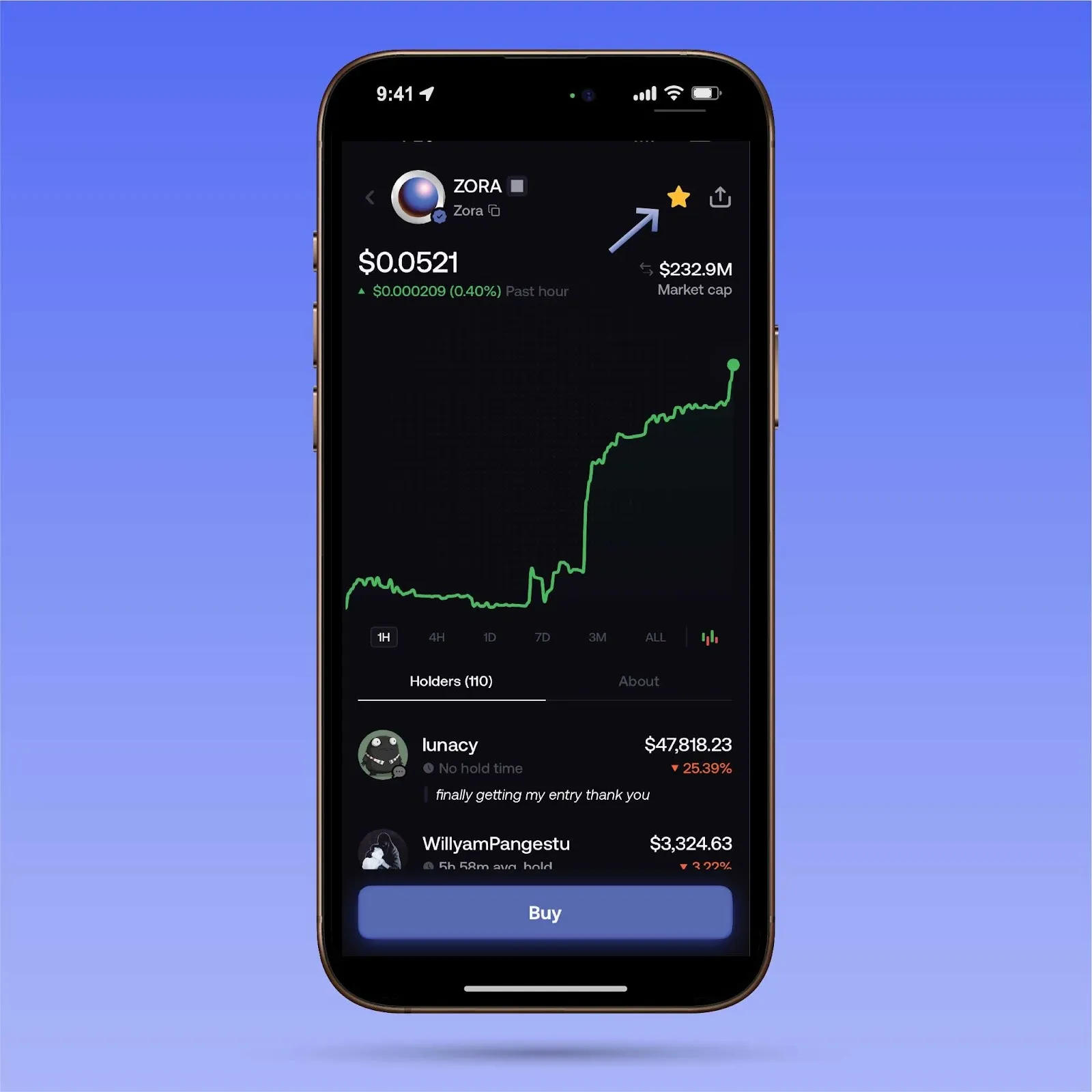
Study all the coins. Click on each asset and examine how the charts have played out. Try to recognize some patterns. Then, combine this knowledge with an understanding of the token's fundamental functions.
This way, you should have enough information to know if and when to invest in the coin.
This is a general overview of how token creation and pricing mechanisms are important.
Before buying a token, do your research to find out how the token was launched. Then do your history homework. Look at other tokens that have been launched the same way to give you a rough blueprint.
How do you value a token?
Now that you know the different ways in which tokens are launched and what it can mean for the future price action of the coin, let's go a step further and see how you can leverage this information to value a token.
Let's say we have a token launched through a bonding curve launchpad, and it's a memecoin.
Let's call this token OMOF (Yes, I know, not the most creative)
At a very high level, valuing OMOF comes down to a basic game of supply vs demand.
First, you identify the demand. What's the narrative for OMOF? Is it part of an existing meta? Is it part of a new narrative? How much traction is it getting across social media? Is the attention sustainable?
Once you understand the demand vectors, you compare them to the supply dynamics.
What's the total supply of the token? Since it's a bonding curve, the supply is fixed, but how is it distributed? Is there a lot of concentration amongst the top 10 holders? If the sniper bots sell their supply, will there be enough demand to sustain the coin's price?
This will give you a basic understanding of where OMOF stands as a new token in the market.
From here, you get into the finer details.
Let's say OMOF is a coin in the "AI x memecoin" category and has been launched on the Base layer 2 blockchain.
Now you start to compare with other players in the sector.
Find all the coins in the same category, launched on Base, and that have been launched through a bonding curve.
- Coin A is at $1B market cap
- Coin B is at $100M market cap
- Your coin, OMOF, is at $10M market cap
Now you have a rough barometer for the scope of your coin. You can use these as targets you think the coin will beat or targets to sell at.
But once you understand the broader market, you then bring in your understanding of the demand and supply.
Based on your understanding of the money flows into the coin, the supply distribution, the holder demographics, etc. And how will this impact the attention and narrative appeal of your coin? Is the current valuation justified?
Is OMOF better than coin A or coin B? Is it justified that OMOF is 100x lower in value than coin A?
If you believe that the valuation is not justified, then you have a rough idea of what the value of your token should eventually be and make a trade based on that. Once you believe your token has reached a saturation point, you'll know when to exit.
However, making astute comparisons to the rest of the market should give you a good understanding of where your token stands in terms of valuation and how you should structure your trade.
Based on this, you should be equipped with enough information to decide whether your investment decision makes sense or if you should wait it out and buy at a better price later on.
To stay up to date with all the latest updates from fomo, be sure to follow us on X and join the Discord. To learn more about fomo, be sure to check out the website.