The Psychology of Trading: Different Trader Archetypes Explained
fomoDecember 25, 2025


Trading is a unique game. It's like playing in a massive MMORPG/Battle Royale style game where it's you against every other trader in the orderbooks, but at the same time, it's also you vs. yourself.
Yes, you can conduct all the fundamental analysis in the world, compile a plethora of different technical indicators, and even draw imaginary lines on your charts.
However, at the end of the day, what ultimately makes or breaks a trader is the trader's psychology.
How does one trade? Can they be in control of their emotions at all times? How do they react when they make a lot of money? How do they react during a rough spell of multiple losing trades for months?
Although trading is a highly rewarding game, it is also one of the most mentally taxing.
To help you through this journey, we'll look at some of the different trader archetypes so you understand the typical types of traders you are up against.
Understanding trader archetypes
You may have heard the saying that 90% of traders lose money in the market. In the crypto world, that number is likely significantly higher. Partially because of how volatile it is, but primarily because of how, for lack of a better way of saying it, degenerate this industry is.
Crypto still has its "Wild West" elements, which means there's a whole set of different trader archetypes that you likely won't see elsewhere. So let's run through them.
1. The Diamond-Handed Trader
A diamond-handed trader is one of great mental resolve. No matter what anybody says, nobody will be able to shake them out of their position.
They will hold on to their investment forever, through both good and bad times. They will never sell unless absolutely necessary.
The term diamond-hand comes from the fact that diamonds are the toughest element on earth to break. So if your hands are made of diamonds, you will never capitulate regardless of how bad things get.
This can go either way. It can help a trader or hurt them.
For example, the original diamond hand traders are the Bitcoin OGs. Those who believed in BTC when nobody else did. Through all the chaos, multiple bear markets, and tough times, they persevered. Now, everyone wishes they had listened to the OGs and bought some BTC in 2009.

On the flip side are those who diamond-hand the wrong project. These are often referred to as "community members" in an ironic way. They often fall prey to manipulation and marketing tactics from malicious teams that fail to disclose the whole truth.
They buy the token, and even if the team is dumping on them, they continue to hold, or even worse, buy more. Sometimes it reaches cult-like status. Despite the team not delivering, these traders continue to believe.
As we know, diamond-handed people are of great mental resolve. So, no matter what evidence people present, there are cases where people still don't believe they have been swindled.
The result is that they take a major hit on their portfolio.
Being a diamond-handed trader is a double-edged sword. It can help you make great returns, but you must balance this by sticking to a plan so you know when to exit if things go south.
2. The Paper-Handed Trader
The opposite of the diamond-hand is the paper-handed trader. This is a trader who typically suffers from a lot of market PTSD.
They often struggle to hold onto an asset for longer than a day. They will panic-sell at the slightest sign of a potential dump and also quickly sell as soon as they have made a bit of a profit. They do not want to "get got" by the market ever again.
Again, similar to the diamond-handed trader, this can be a good thing at times and a bad thing at times.
There's a saying among crypto traders, "If you're going to panic, panic first." The idea here is that if you expect a massive market crash, which often comes with panic selling, be the first one to panic and run out the door, you will get out unscathed. You won't be the one left holding the bag.
On the flip side, if you sell an asset too early, you may pay the price.
A great example of this is WIF. When WIF gained momentum, the developer sold his coins very early in the coin's life cycle, and as the developer sold, many others followed, thinking the coin was dead. Turns out it wasn't. It ended running to over $4B market cap.
Those who held on made life-changing money, while those who paper-handed ended up living to regret it.
3. The Gambler
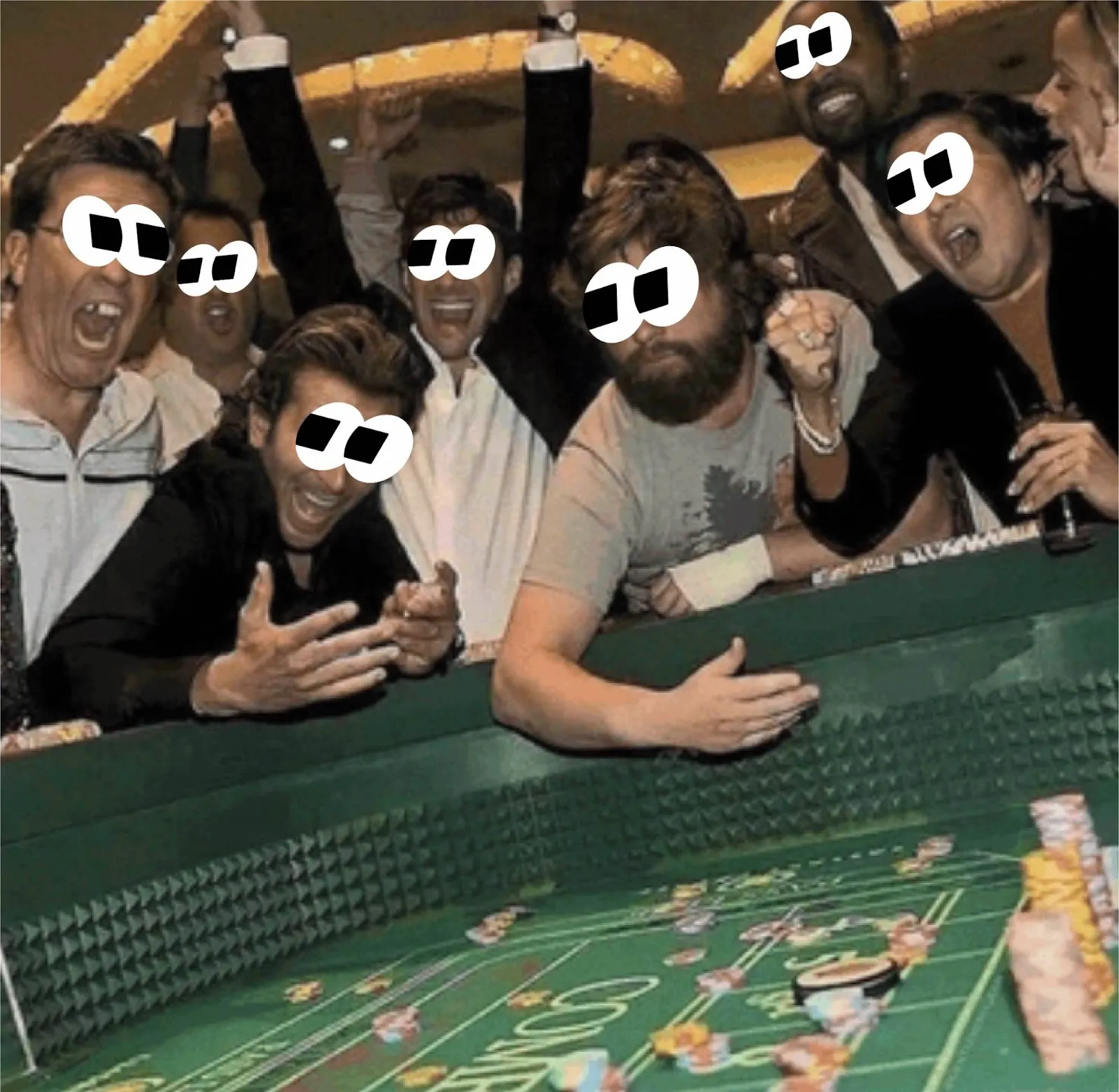
This trader is often a wreck psychologically. They're usually here for a good time, not a long time. There's no real research, no analysis, no trading process—just pure vibes.
The gambler is here for a quick flip. They either retire their family in one trade or they have to sell their house, nothing in between. The gambler is often chasing a dopamine high rather than profit.
Crypto is often referred to as the greatest casino in the world because it's a market that offers multiple life-changing wealth generation events in a short period, which tends to attract the gambler archetype of traders.
These are the traders who slide the leverage bar to 100x and hope for a miracle. They will invest too much money in risky coins with a market cap under $1M, hoping to achieve a 100x return, but often end up getting rug-pulled.
Most crypto traders have often dabbled in a little gambling-esque trading, but it comes down to managing your risk and your emotions. Do not risk too much of your portfolio, and know when to quit.
Ultimately, when it comes to emotions and trading psychology, the one of a gambler is something you want to steer far clear of.
4. The Chaser
There's a lot of overlap between the gambler and the chaser. The chaser is another trader who lacks a trading process, conducts no research, and has yet to master their own emotions.
The altcoin market is often a game of capital aggressively rotating from one narrative to the next. The chaser is someone who may not be early to a narrative but succumbs to FOMO (fear of missing out).
They see a narrative that they missed, and everyone is talking about how it's the next big thing, so they can't help themselves and chase the popular coins in the narrative.
Most of the time, the chaser ends up getting burned. They often buy too late, while those who were early to the narrative begin selling their positions. The chaser gets left holding the bag.
However, on some occasions, certain narratives reach escape velocity, where they continue to gain momentum. In this scenario, the chaser turns out to be correct and makes some profit.
In general, it's always better to have a well-thought-out trading process rather than blindly chasing because more often than not, you will get burned.
If you missed a trade, do not succumb to FOMO. Stay calm and stay in control; there will always be a next trade to catch.
5. The Day Trader

These are the traders who trade on lower time frames, taking multiple (often hundreds) trades per day. This includes the scalpers and the intraday traders.
These traders often adhere to a strict trading process, and their setups primarily consist of technical indicators.
Although some of these traders may use fundamental analysis, they do not hold trades for long, so they rely more on technical indicators and technical analysis to make their money.
People often say it just takes one trade to make it, but the opposite can also be true. Your next trade might not be the one to help you make it, but the next 1000 trades compounded could be.
Being a successful day trader requires strong control over your emotions, as you must adhere to your plan regardless of external factors and not let emotions sway your decisions.
6. The Analyst
The analyst is a trader who tends to have a very well-thought-out trading plan. They often mix fundamental analysis with technical analysis and indicators to make their decisions.
Unlike day traders, the analysts are more comfortable holding positions over multiple weeks.
However, just because this archetype has a more thought-out way of trading, success is not guaranteed. It all comes down to finding an edge in the market.
A skilled analyst can consistently identify an edge and capitalize on it to generate profits in the markets.
On the flip side, there may be a trader who puts in all the effort beforehand but still makes no profit. This could be because their trading process is not ideal, or they simply have no significant edge.
Becoming a good analyst-style trader is something that requires patience, practice, and experience. Although difficult, those who put in the work eventually stand a good chance of being profitable in the market.
7. The Data Nerd
The data nerd is someone who very rarely lets their emotions get the better of them. They are very mathematically attuned, constantly sifting through data and building models off that data.
This trader archetype requires immense technical skill and is often hard to master, especially in crypto, where there are so many different sources of data that can often be conflicting.
Although it's a complex archetype to master, it yields consistent results because the process is purely mathematical.
These guys live by one mantra. Emotion is the enemy, data is king.
8. The Algo-Trader
The algo-trader is a very popular trader archetype in the crypto world. While some traders struggle with trading psychology, the algo-traders take out that element altogether.
These are traders with excellent technical abilities who develop strategies using data, rigorously backtest them, and then build bots that automatically execute these strategies. This way, there is no human involvement as the bot purely follows the strategy built out with zero chance of emotions getting in the way.
This is also a saturated market, so finding your edge can be very difficult. However, if successful, algo-trading is a very fruitful venture.
These guys live by one mantra. Emotion is the enemy, data is king.
9. The Veteran

"I am the market, and the market is me."
The veteran is someone who has reached a state of ultimate zen. They are at one with the market.
They have been in the market for so long that they simply no longer feel any emotion. They have seen it all and done it all; absolutely nothing can faze them. They know how to survive through the tough times and how to make money during the good times while exiting at good prices.
The veteran often trades purely on intuition simply because they've done it for so long. Sure, external research and indicators may be part of the process, but at this point, it becomes second nature.
This archetype has mastered trading psychology because they have been through so much and eventually mastered their craft.
No matter how dumb a narrative sounds or how sophisticated something is, they often dabble in all fields that they believe are good money-making opportunities.
This is the proverbial end state for a successful trader. Cool, calm, and collected. Completely in-tune and at one with the market, simply making their money in silence and moving on.
Mastering your own psychology
At the end of the day, the market does not care what archetype you fit into. The market will simply remain the market and continue to do its thing.
There is no correct way to trade or a correct archetype. It all comes down to what suits you best. It's about putting in the work and paying your tuition to the market to find out what your style of trading is.
This is why psychology is important.
You first need to know yourself. There's nowhere to hide with the markets, so you cannot lie to yourself. Things like journaling, research, interacting with other traders, and actually trading are what will help you understand yourself better. Identify your archetype and work on your pitfalls to become better.
Secondly, understanding the other archetypes will also give you an advantage because you'll understand the psychology of the people you are up against. Over time, you will learn how to use that knowledge as a weapon to enter or exit trades at the correct time.
You will see a lot of the archetypes mentioned in this article on the fomo app. You will see some diamond hands, some paper hands, some gamblers, and some analysts.
What you have to do is figure out who is who and which of these traders is more successful. Ideally, you find traders with a similar archetype to yours, so you can generate more trading ideas that fit your trading style.
You now understand the psychology and are familiar with the archetypes. That's half the battle won. The other half is execution.
You can now browse through social feeds, examine different trader profiles to understand their archetypes, and gain a deeper understanding of the playing field directly on the fomo app. You can then build your own plan and execute it with ease directly on the app.
Trading is a journey, and fomo is here to make that bumpy ride a lot smoother.
To stay up to date with all the latest updates from fomo, be sure to follow us on X and join the Discord. To learn more about fomo, be sure to check out the website.