Spotting Scams and Low-Quality Tokens: How to Trade Safely on fomo
fomoDecember 25, 2025


You've probably read the headlines already. "Crypto is a scam," "Crypto is a ponzi scheme," "Crypto is an unregulated bubble," "You will lose all your money." The list goes on and on.
Allow us to calm your nerves. Crypto is NOT a scam. However, that doesn't mean there aren't many malicious actors looking to prey on unsuspecting victims.
Rugpulls, insider pump and dumps, honeypots, wallet drainers, and so on are all common issues in the world of crypto trading. However, scams exist in every industry in the world, not just in crypto; it's just about having your wits about you to avoid falling into the trap.
So today, we are going to show you how to spot these scams so that you have the safest and smoothest crypto trading experience on fomo.
Although there are many factors to consider, these are the main red flags to note before buying an asset.
Due diligence on fomo
Scam prevention is very important in this chaotic world of crypto, and fomo offers a wide array of tools and features to create a safer trading environment.
Let's say you leverage your social feed on fomo and find a coin that interests you. When you click on it, try to refrain from immediately aping in. Scroll down a little bit and conduct some basic due diligence.
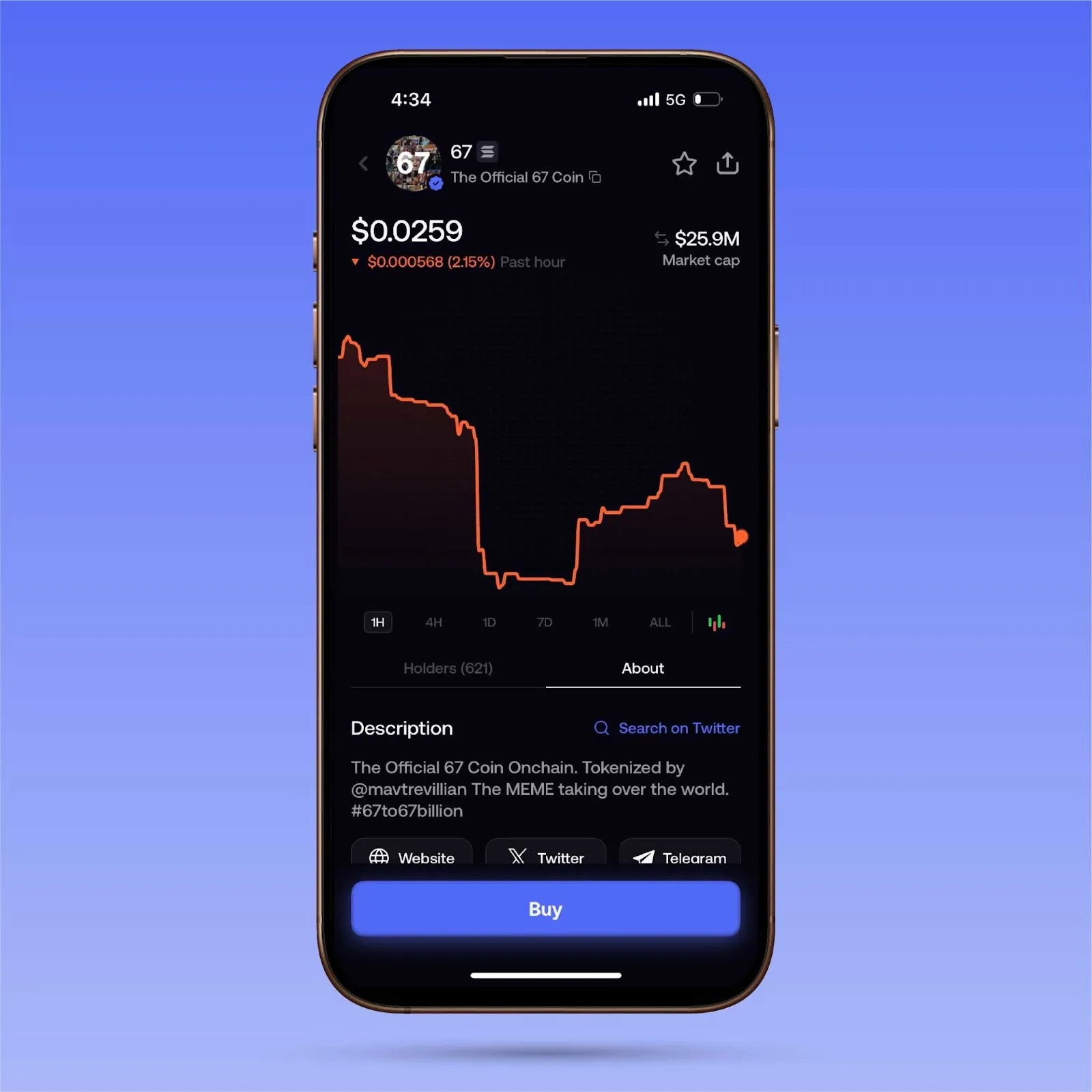
As you can see, one of the sections you will see on a coin is the "About" section. Here, you will find a basic description of the project and the coin. You will also get links to the tokens' social media channels (X, Discord, Telegram) and the website.
Have a browse through these channels and conduct a social media audit. We will dive deeper into how to do one in the next section.
Apart from this, the fomo app often displays warnings for certain tokens.
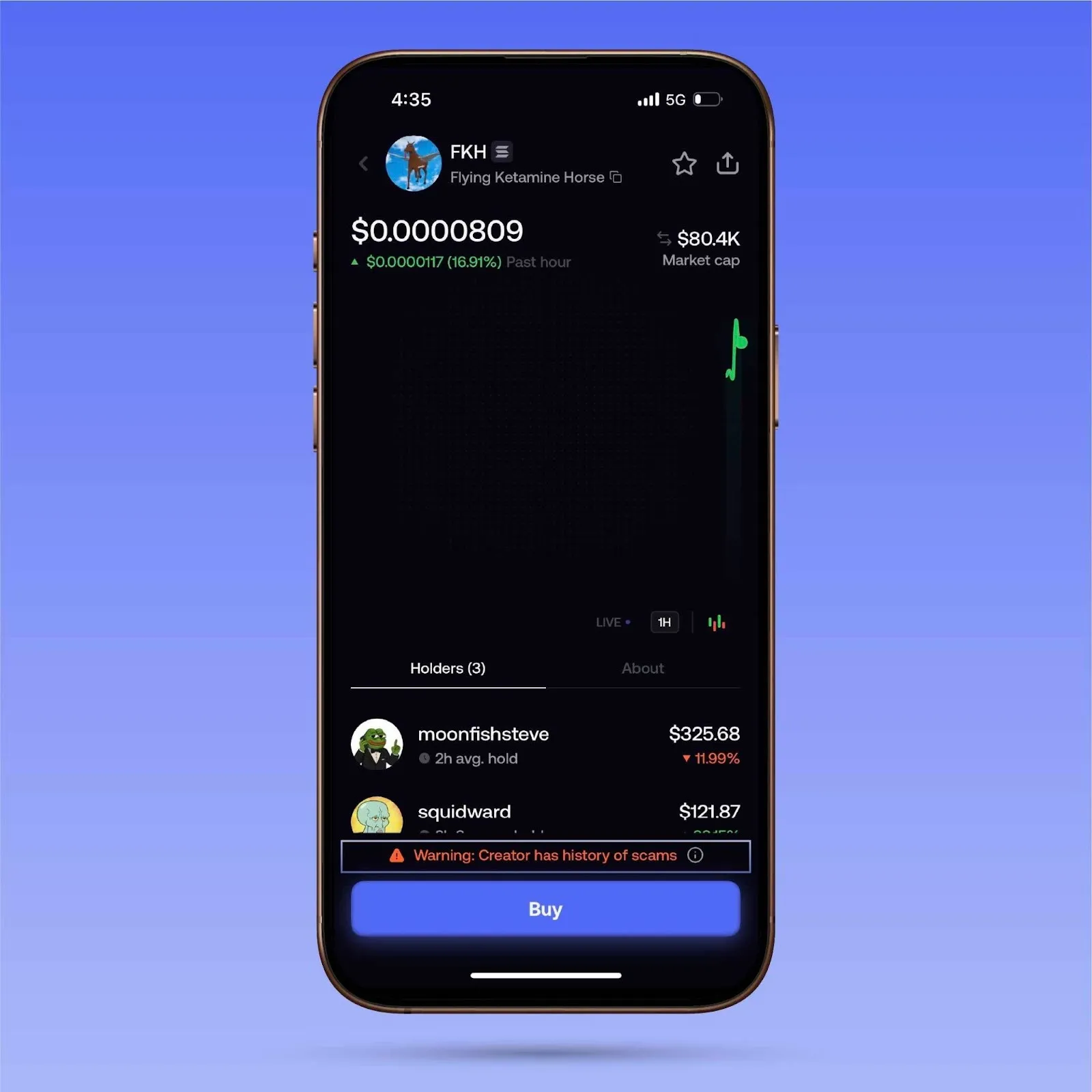
Due to the wide variety of scams that exist, you may always find different warnings. You may receive a high volatility warning, which is typically issued for low market cap coins that tend to exhibit very aggressive price swings, which can result in significant losses. There are also warnings about potential scams and honeypots, where purchasing the token may result in the total loss of funds.
Keep a keen eye on these warnings and take them seriously.
Another thing to keep an eye out for is verification.
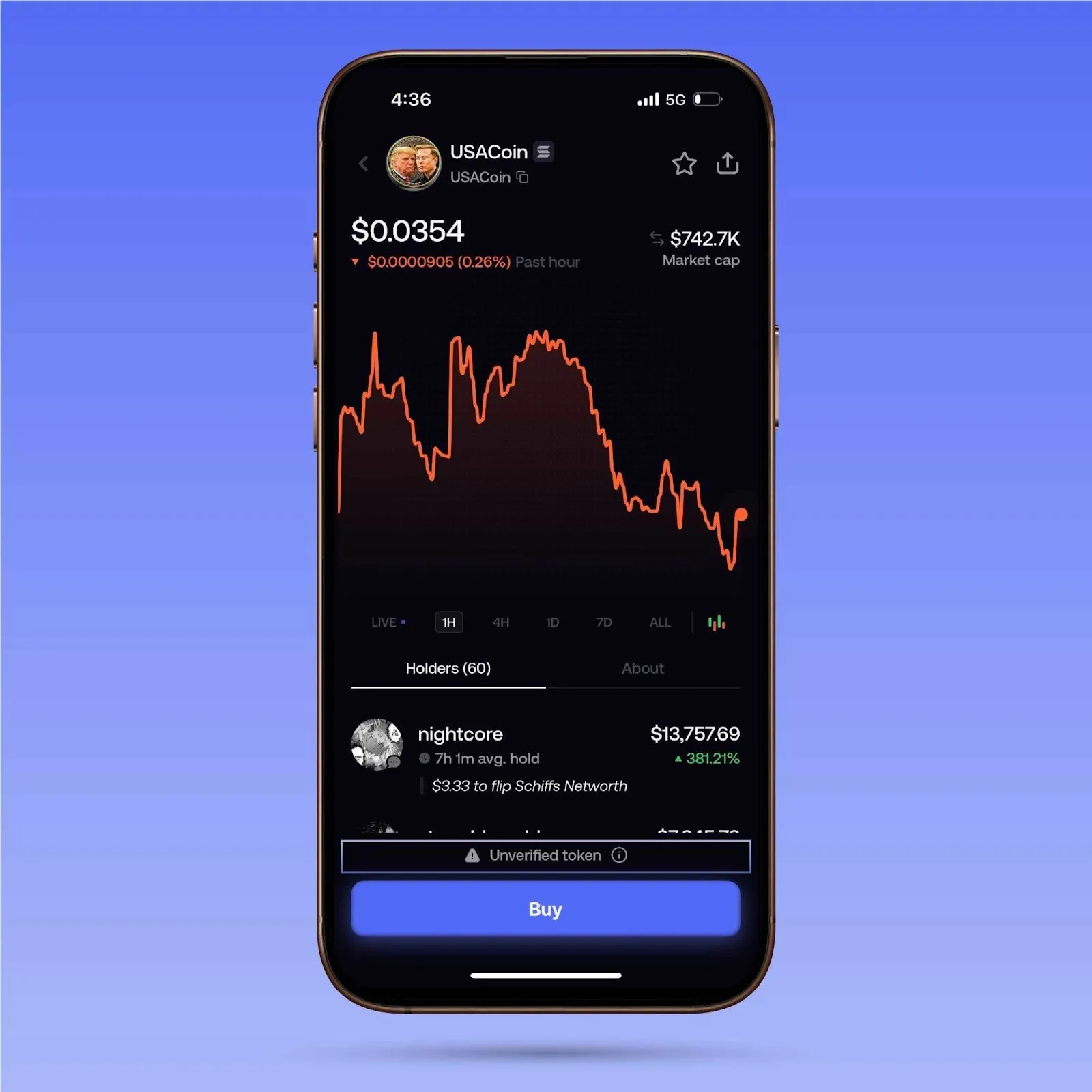
Although you can trade all sorts of tokens on fomo, the fomo team is constantly independently sifting through tokens and verifying ones that they deem are not low-quality or scams.
The team consists of crypto veterans, and they conduct rigorous due diligence before giving a token the verified stamp on fomo.
So if you want to be extra safe, you can also exclusively only trade tokens that have been verified fomo. You can find them here.
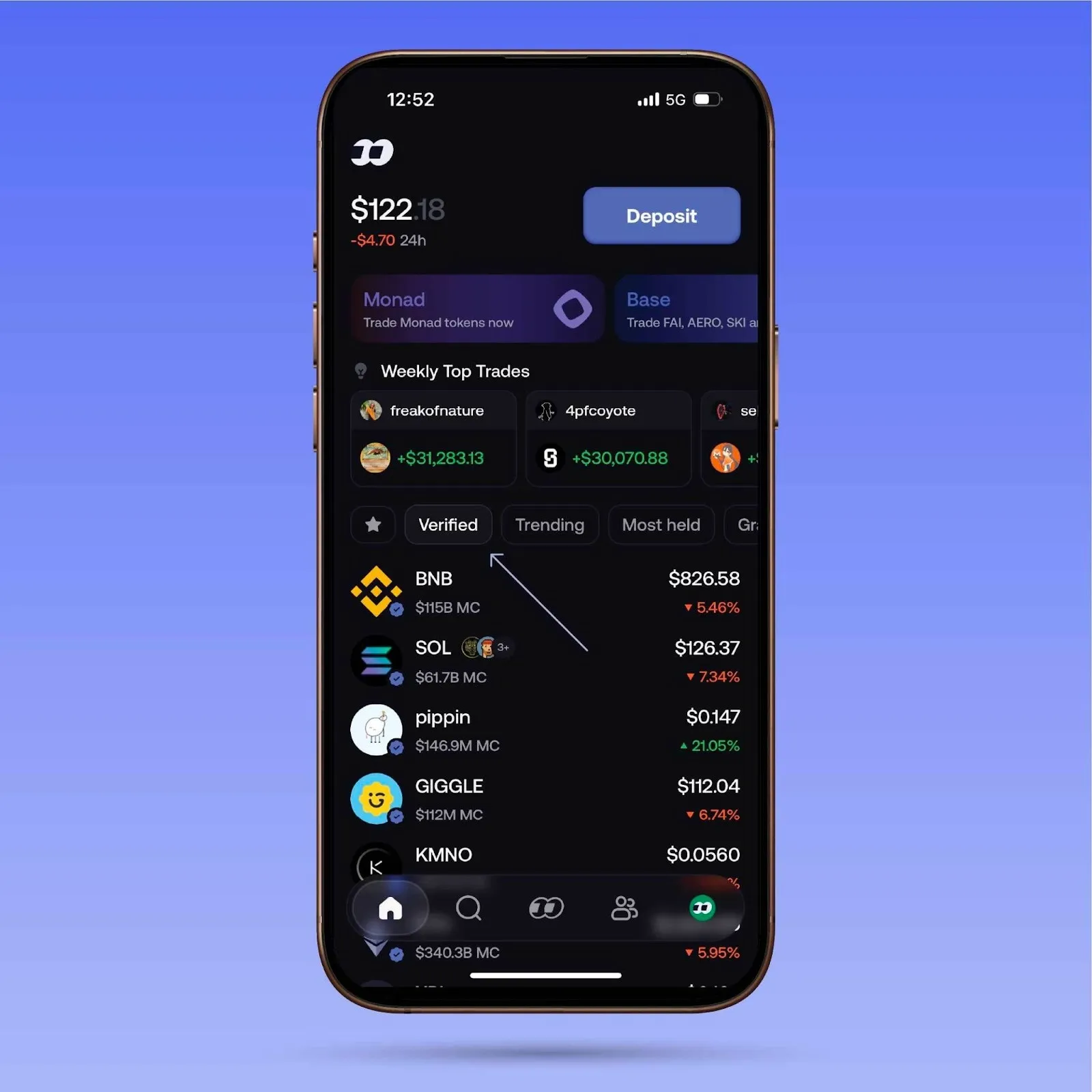
Another thing you can do, especially if you're in doubt about whether the token is good or trustworthy, is to check the holders.
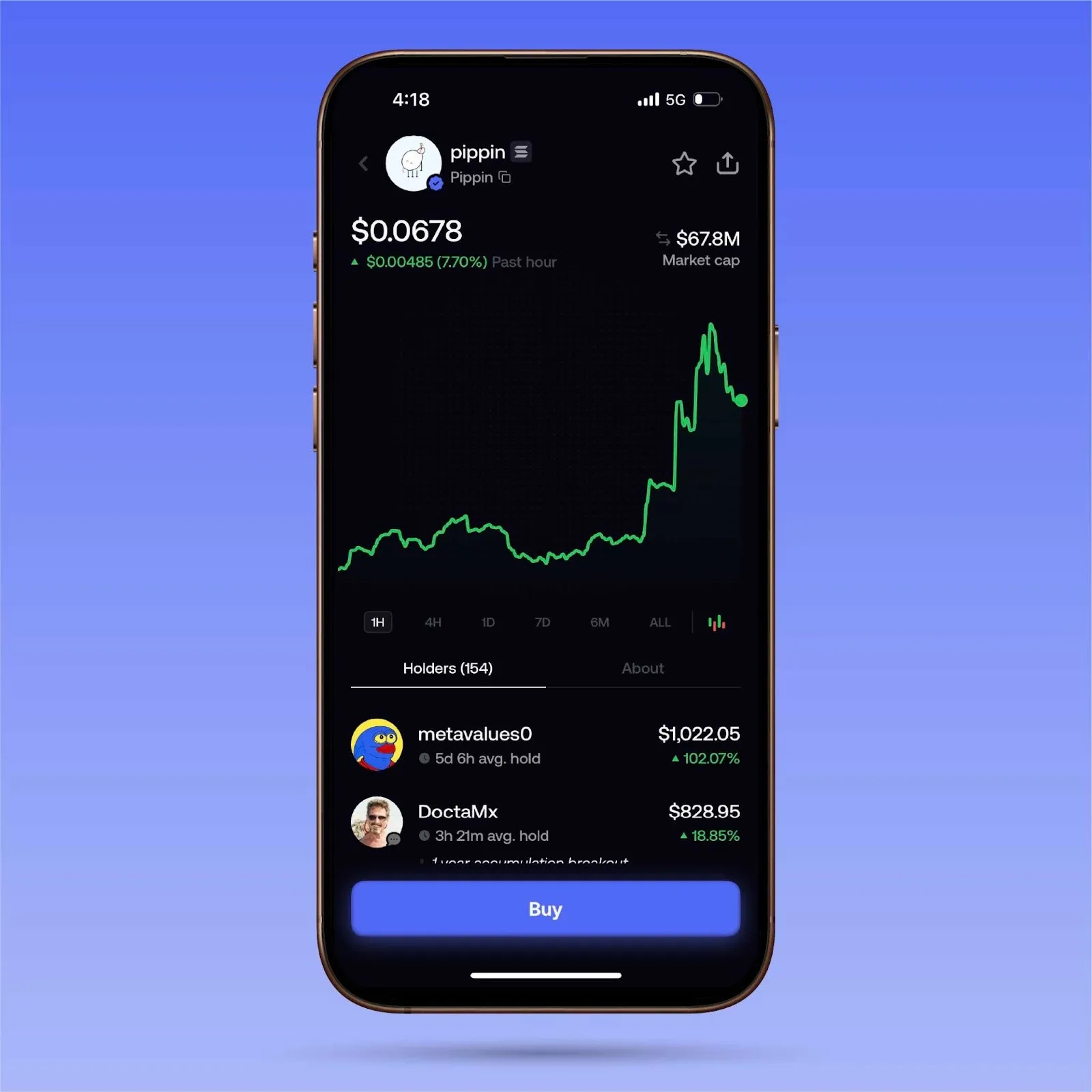
If you see some traders that you know are good/reliable in the holders list, it could give you that little bit more reassurance that you're good to go ahead and buy the token.
Social media audit
Whenever you find a new project, the social media will be your first impression of the project. Since it's crypto, it will most likely be an X account, but Instagram, YouTube, and LinkedIn are also becoming popular marketing venues.
As stated earlier, you can easily find a project's social channels on fomo using the "About" section.
When looking at a social media account, you need to put on your skeptical hat. Question everything.
- Is the follower count and engagement botted?
- Who's talking about the project/coin? Is it just paid influencers and bot accounts, or are the interactions genuine?
- What's the marketing like? Is it constantly based around posting charts and misleading tweets designed to pump prices, or is there a genuine effort behind the marketing push, with features and technology being highlighted?
- Who on social media is most actively pushing the coin? Do they have a history of promoting scams, or are they genuine?
- Are the links working correctly? Do they direct you to all the relevant information you need about the project?
- When you click on a link to a website, for example, is it well-made or low effort? Are there working links to docs or blogs to give you more information? Is there information about the team?
These are just a couple of examples, but the idea is clear. Ask as many questions as possible and scrutinize everything. Malicious actors will try everything in their power to get a couple of bucks off of you; it's up to you to be smarter than them and not fall for the tricks.
It's good practice when auditing social media and websites to have a mental checklist. Every time you spot a red flag, tick that box, and if there's one too many red flags, then you know it's not worth the risk.
Tokenomics
Tokenomics refers to the design of the token's economics. This includes supply dynamics, the emission schedule, and functionality, among other factors.
Understanding tokenomics is crucial because it ultimately determines how the coin you're purchasing will function.
- Supply and emission - What is the total supply of tokens? Is the supply fixed, or will it continue to increase? What is the emission schedule like? How many new tokens will be minted over a specific period, thereby increasing the supply?
Typically, coins with high inflation tend to underperform naturally. But closely tied to supply dynamics is how the tokens are distributed.
- Distribution - Projects typically inform users of how the token supply is distributed. How much goes to investors, team, community, etc?
If a significant chunk of the supply is going to the team and investors (over 60%), that's usually a concern. When insiders control a large percentage of the supply, it is difficult to be certain of their intentions. Oftentimes, this results in constant selling pressure.
In general, there should be a healthy and relatively equal distribution amongst all stakeholders.
- Time locks - The investors and teams typically have their tokens locked for a specified period of time, as determined by the team itself. It's always essential to verify for yourself that the tokens are actually locked.
You should check how long the lock times are. Tokens that have insiders locked for a very short time (lower than 6 months) show a lack of long-term alignment.
It's also important to stay on top of unlock schedules, as there tend to be moments when many investors or teams have their tokens unlocked simultaneously, causing significant selling pressure.
- Functionality - How does the token actually work? Is it just a governance token, or is there real value tied to it? For example, if the protocol earns revenue, do they initiate buybacks/burns to link the success of the projects to the success of the token?
With memecoins, things are a bit different.
Most memecoins are now launched through launchpads like Pump.fun, so the supply dynamics will be similar. Secondly, you are unlikely to receive detailed breakdowns on how the supply is distributed or the functionality of the token.
With memecoins, there are a couple of other things to keep note of:
- Locked liquidity - A common misdirection by scammers is to claim that "liquidity has been locked" when, in reality, they've just sent it to a dummy address that makes it look like it's been locked on most tools.
They still maintain control over the tokens and can dump at any time. Therefore, it's important to verify if the liquidity locks are real or not.
- Sniper - When tokens are created through launchpads like Pump.fun, a large chunk of the supply is usually sniped by sniper bots at launch.
After the token gains a bit of momentum, these bots often dump the token en masse, leaving the holders stranded. Very few coins recover from this.
To be extra careful, take a look at the early buying activity of the coin you're going to purchase to check the proportion of supply that's been sniped.
- Wallet clusters - Teams behind a certain memecoin often say they only have a small percentage of the supply, and they are "never going to sell." They even post wallets in community channels as proof.
However, there are tools like Bubblemaps that allow you to identify wallet clusters. A lot of the time, the teams have multiple side wallets that people don't know about, through which they dump.
Although it's hard to detect them, sometimes these wallet clusters are easily identifiable.
- Bundled coins - People often assume that coins launched through launchpads are fair because there are no pre-mines or insider allocations of any kind. But that assumption would be wrong.
Malicious actors use bots to "bundle" transactions. It's a way for them to bundle multiple transactions into one as the very first transaction. This way, scammers can bundle 20%, 30%, or even 70% of the supply across multiple wallets.
As the coin pumps, the scammers quickly unload the bundle, leading everyone to lose money.
It's important to use tools like Bubblemaps or other bundle scanning bots that scan early buys to identify bundled coins.
Team transparency
Having a read on teams is one of the most challenging yet most important things.
You should be able to find information about the team on their socials (look through the "following" on their Twitter account), the website, and within the community channels (Discord, Telegram, etc).
Then there's the next element. Is the team doxxed (i.e., their identities revealed) or anonymous?
Typically, it's considered more ideal if a team is doxxed because you can verify the team's credentials, and there are faces tied to the project, so there is an element of accountability, making them less likely to scam.
However, just because they are doxxed doesn't mean you're in the clear, because there are a lot of people with revealed identities who still scam and roam around scot-free. Do background checks on their history with other projects.
When it comes to anonymous teams, people often advise exercising caution because there's no accountability, making them more likely to scam with no consequences.
However, just because a team is anonymous does not mean they are bad. Some of the industry's greatest products have been shipped by anonymous teams. After all, the creator of Bitcoin itself still remains anonymous.
So when it comes to teams, this is what you should be looking at:
- Are they actively engaging in community channels, answering questions, and discussing upcoming features/plans?
- Are they constantly banning people for valid questions and criticisms? If yes, then that's a red flag.
- Do they constantly ship features and meet the deadlines that they have set? A history of delays and defaulting on deliveries is not good.
- Do they have a history of shady dealings, or are they clean?
- Are they transparent in terms of disclosing audits or putting out feature roadmaps with progress updates?
These are just a few examples, but the ultimate aim should be to get as much information as possible about the team behind the project you're about to invest in.
Do background checks to ensure that the team does not have malicious intent. Even if the product is technically great, it may still turn out to be a poor investment if the team fails to execute it correctly.
Over time, you should develop an intuition for identifying a good or bad team.
Copycat honeypots
Imagine you're using a project that you like and think will do really well in the near future.
You then hear that they will soon be launching a token called $PROJ (for example). You're hyped up and ready to buy it. You search the ticker, paste the contract address into a DEX, and buy the token.
However, when you go to sell, you realize that you can't. You've been caught by a copycat honeypot.
It may sound silly, but it is very easy to get caught off guard by these scams.
Scammers often pump fake liquidity and fake volume into these coins so it looks legit. The chart looks fine, and the data checks out on most charting platforms, but in reality, it's just another honeypot.
It's important to:
- Verify the contract address from the project's official website or social media. Don't trust anything else.
- Use honeypot checkers before purchasing a token.
- Do a test transaction first. Buy a small amount and instantly sell it to make sure everything is working fine.
- This is often flagged by fomo in-app with warnings, so you should be fine. But always better to be safe.
Community analysis
Another good way to identify scams and low-quality projects is to simply get involved in the community. Join the Telegram and Discord channels.
If you don't really like to get involved in conversation too much, just observe; you can learn a lot about the quality of the project just from observing interaction.
How is the team behaving? What is the majority of the discourse about? Are people only saying "wen airdrop" "wen pump" or are they genuinely talking about the tech and sharing good memes? What are the general community vibes? Are there a lot of bots/farmers in the community, or are there people who genuinely care about the project?
You have to try to pick up on all the little queues available. Over time, as you analyze multiple communities, you'll be able to tell very quickly which ones are green flags and which ones are red flags.
It may sound silly, but community plays a major role in the success (or downfall) of coins. It's important to pay attention to.
To Summarize:
- Leverage the tools and features on the fomo app to conduct due diligence
- Do a complete social media audit before buying a token
- Take a look at the tokenomics, understand its functions and supply dynamics to determine whether it's worth the investment
- Keep a keen eye on how the team behaves/interacts
- Analyze the community and be watchful of cheap scams like copycat honeypots
If you actively do all of these things before purchasing a coin, yes, it may take you time, and you might think that you "missed the boat", but more often than not, this will save you a lot of money.
Don't let the fear of missing out control your trading process. Use the fomo app to create a safe and secure trading process.
The fomo app offers you all the tools and information you need to identify whether a project is a low-quality scam or not on a single interface. You don't need to hop across tabs and scan multiple platforms.
Just choose your token, do your research, and make your decision. fomo is not only making crypto easier for you, but safer too.
To stay up to date with all the latest updates from fomo, be sure to follow us on X and join the Discord. To learn more about fomo, be sure to check out the website.